
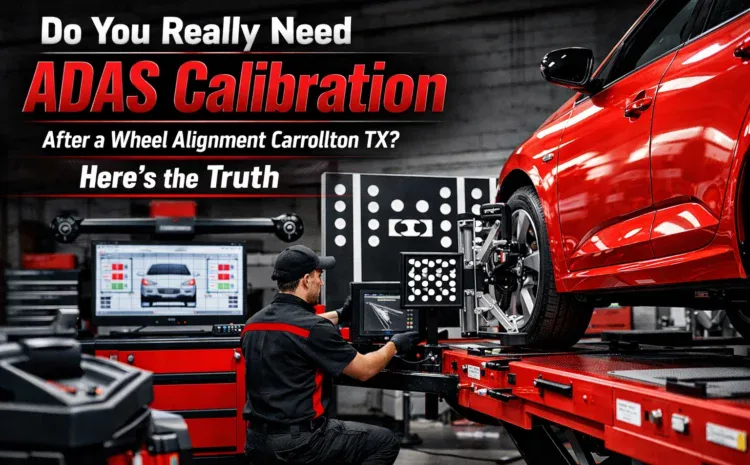
Do You Really Need ADAS Calibration After a Wheel Alignment Carrollton TX? Here’s the Truth
You’re driving down Belt Line Road, and your car starts tugging to the right. It’s subtle at first, but after twenty minutes, your wrist starts to ache from the constant correction. That physical tension in your forearm isn’t just a nuisance; it’s the physical manifestation of your car fighting against its own geometry. You know you need a wheel alignment Carrollton TX, but when you drop your car off, the technician mentions something about “ADAS calibration.”
Suddenly, a routine maintenance task feels like it just doubled in complexity: and cost. You might find yourself wondering: Is this just a digital upsell, or does my car’s safety actually depend on it?
At Blanco’s Flawless Steve King Automotive, we’ve spent decades under the hoods and chassis of vehicles in the Carrollton community. With thousands of alignments performed every year, we’ve seen the automotive world shift from simple mechanical adjustments to complex software-driven ecosystems. We aren’t just mechanics; we are your neighbors who happen to have the high-tech diagnostic tools to keep your family safe. The truth about ADAS and wheel alignments isn’t just a “yes” or “no” answer: it’s a matter of modern physics.
What Exactly is ADAS?
Before we dive into the “why,” let’s talk about the “what.” ADAS stands for Advanced Driver Assistance Systems. These are the “digital guardian angels” built into your vehicle. If your car can stay inside the lines on the highway, beep when someone is in your blind spot, or automatically slam on the brakes to avoid a fender-bender at a stoplight, you have ADAS.
These systems rely on a network of sensors, including:
- Cameras: Usually mounted behind the windshield or in the grille.
- Radar: Often hidden behind the front bumper or emblem.
- Ultrasonic Sensors: The little circles you see on your bumpers for parking.
- Lidar: Found in some high-end or newer autonomous-leaning models.
These sensors act as the car’s eyes and ears. They send data to the vehicle’s computer, which then makes split-second decisions to keep you safe. However, these “eyes” are only useful if they are looking in exactly the right direction.
The Mechanical Link: Why Alignment Changes Everything
Think of your car’s ADAS system like a professional marksman. For the marksman to hit a target a mile away, the scope on the rifle must be perfectly aligned with the barrel. If the barrel is bent even a fraction of a millimeter, the scope will point at the target, but the bullet will land somewhere else entirely.
A wheel alignment Carrollton TX is the process of adjusting the angles of your wheels: specifically the camber, caster, and toe: so they are perfectly parallel to each other and perpendicular to the ground. When we adjust these angles, we are essentially changing the “thrust line” of the vehicle (the direction the rear wheels are pushing the car).
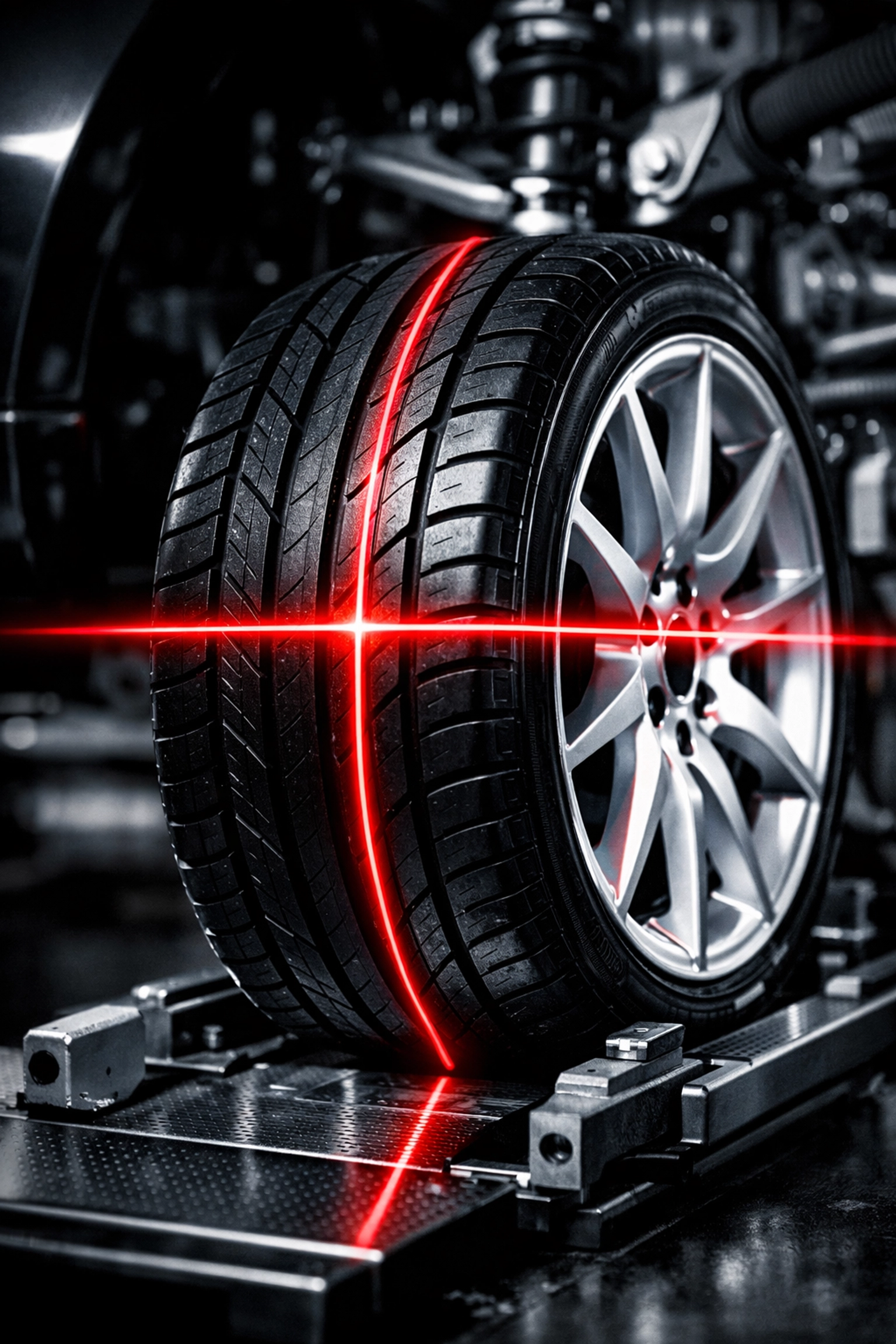
If we change the direction the car is pointing but don’t tell the cameras and radar, those sensors are still “looking” where the car used to point. This creates a “geometric mismatch.” For example, your lane-keep assist might think you are drifting out of your lane because its camera is angled two degrees off from where the wheels are actually heading. The car tries to “correct” a problem that doesn’t exist, which can lead to jerky steering or, worse, a complete system failure when you need it most.
The High Stakes: Prevention vs. Neglect
In the world of automotive repair, there is a massive difference between the cost of prevention and the cost of neglect. Ignoring ADAS calibration after an alignment is a gamble with high stakes.
- Safety Compromise: If your Automatic Emergency Braking (AEB) system is miscalibrated by just one degree, it might fail to detect a stopped car in time or, conversely, it might “see” an overhead bridge as an obstacle and slam on the brakes unexpectedly.
- Liability Issues: In the event of an accident, insurance companies are increasingly looking at vehicle service records. If it’s discovered that a safety system failed because a required calibration was skipped, you could face significant liability hurdles.
- Financial Drain: A miscalibrated system often causes the car to fight itself. This can lead to premature tire wear or strain on suspension components, turning a simple maintenance item into a multi-thousand dollar repair bill down the road.
Efficiency is key. Spending a little more on calibration today ensures you aren’t spending thousands on bodywork tomorrow.
Does Your Specific Car Need It?
Not every car on the road requires this level of digital intervention. If you’re driving a classic 1995 truck, your “driver assistance” is a sturdy steering wheel and a clear pair of eyes. However, if you drive a vehicle manufactured in the last decade, there’s a high probability you need it.
Vehicles That Almost Always Require Calibration:
- Tesla (All Models): Autopilot is entirely dependent on camera orientation.
- Toyota & Lexus: Systems like Toyota Safety Sense require precise calibration.
- Ford: Features like Co-Pilot360 rely heavily on radar/camera synergy.
- European Models (BMW, Mercedes, Audi, VW): These brands often have some of the strictest calibration requirements in the industry.
- Honda/Acura: Honda Sensing is standard on most newer models and requires calibration after any steering or suspension work.
When You Might Be Able to Skip It:
- Pre-2010 Vehicles: Most older cars lack the sensor arrays that define ADAS.
- Base Models: Some entry-level “economy” trims lack advanced safety tech.
- Specific Manufacturer Thresholds: Some brands, like Subaru, only require calibration if the alignment adjustment exceeds a specific degree of change.
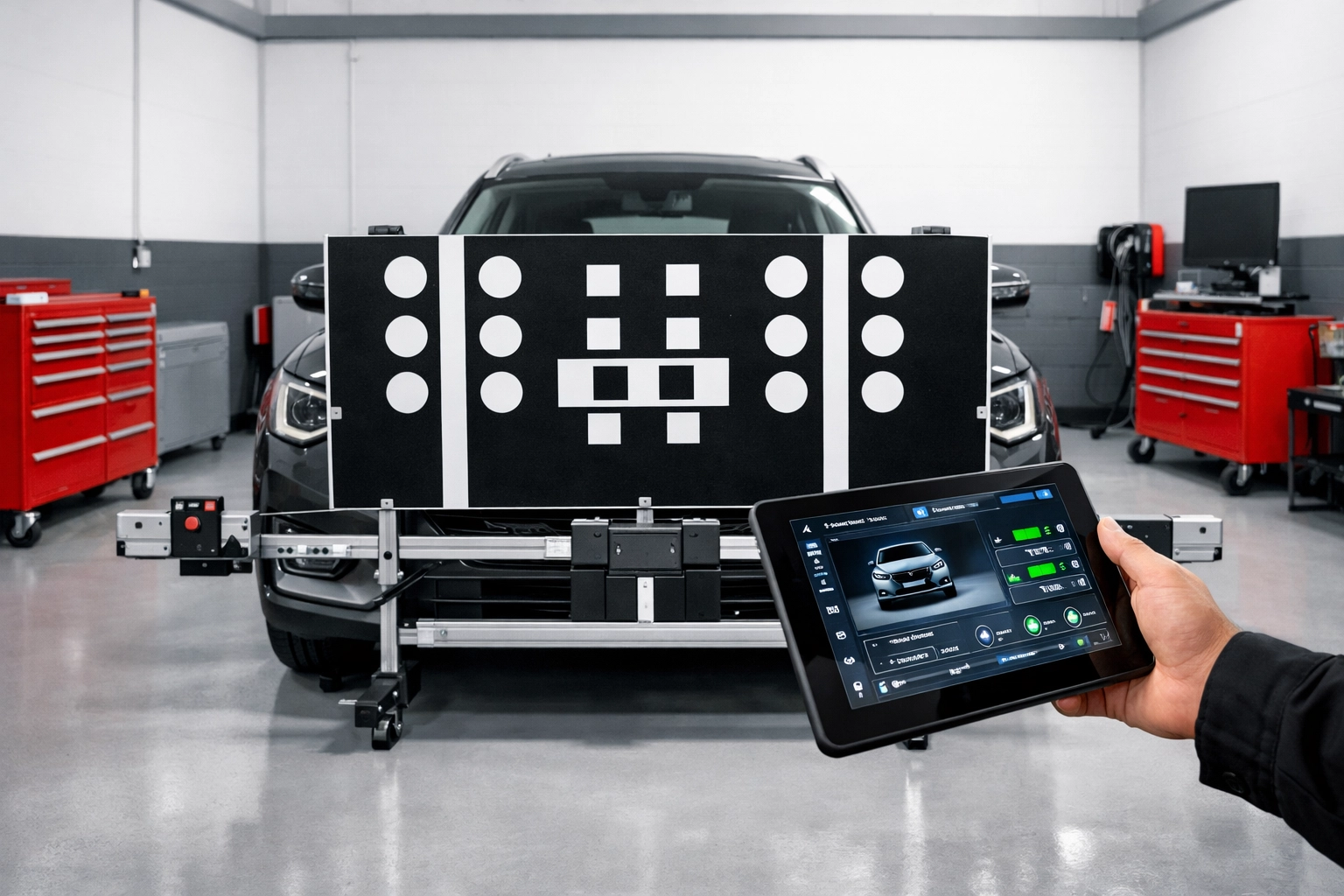
At Blanco’s Flawless, we use OEM-level diagnostic software to scan your vehicle before we even start the alignment. This allows us to tell you: with 100% certainty: what your specific manufacturer requires.
Different Needs for Different Drivers
We understand that a “one size fits all” approach doesn’t work for the diverse drivers in Carrollton.
For the Family Commuter
If you’re shuttling kids to soccer practice or commuting into Dallas, your priority is safety. You rely on that blind-spot monitor when merging in heavy traffic. For you, ADAS calibration is about peace of mind. It’s about knowing that when the car in front of you stops suddenly, your vehicle’s sensors are “looking” exactly where they should be.
For Business and Fleet Managers
If you manage a fleet of service vehicles, downtime is your enemy. You might be tempted to skip calibration to save a few bucks and get the van back on the road. However, the longevity of your fleet depends on precision. A fleet vehicle with a misaligned ADAS system is a liability risk and is more likely to suffer from increased tire wear, hurting your bottom line over time.
The Blanco’s Flawless Difference
The reason Carrollton residents have trusted Blanco’s Flawless Steve King Automotive for years is simple: Transparency. We don’t believe in “mystery repairs.” When we recommend ADAS calibration after your wheel alignment Carrollton TX, we’ll show you why. We can show you the sensor readings and explain how the alignment shift has moved the sensor’s field of vision.
Modern cars are essentially rolling computers. Repairing them requires a blend of traditional mechanical grit and high-level tech expertise. Whether it’s diagnosing a check engine light or performing a complex differential service, we approach every job with the same professional rigor.
Restoring Confidence in Your Ride
Driving shouldn’t be a source of stress. You shouldn’t have to wonder if your car’s safety features are actually working or if they’re just waiting for a glitch.
When you get a wheel alignment Carrollton TX at Blanco’s Flawless, you aren’t just getting straight wheels. You’re getting a vehicle that is fully synchronized: mechanically and digitally. We ensure that your car’s “eyes” are pointing exactly where its “feet” are going.
Don’t settle for a shop that only does half the job. In the era of smart cars, a mechanical alignment without a digital calibration is an incomplete repair. It’s like getting a new prescription for your glasses but keeping your old, scratched frames that sit crooked on your face. You might see better, but it’s never going to be right.
Ready for a Flawless Drive?
If your car is pulling, your steering wheel is off-center, or your “Lane Keep Assist Not Available” light just popped on, it’s time to see the experts. Let’s get your vehicle back to factory-perfect specs so you can drive with total confidence.
Visit us today at Blanco’s Flawless Steve King Automotive and experience the difference that true expertise makes.
Explore our full range of services | Read our customer reviews | Book your appointment